
Maximum temperatures dropped below 40 degrees Celsius in several areas of Punjab, providing slight respite to residents from the intense heat. Haryana continued to experience hot weather, with Rohtak being the hottest spot at 45.3 degrees Celsius.

Several parts of India are experiencing a severe heatwave, with temperatures soaring past 44 degrees Celsius. States are issuing alerts and taking measures to protect people and animals from the extreme conditions.
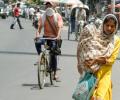
North India is experiencing an intense heatwave, with temperatures soaring to 48 degrees Celsius in some areas. Several states have issued warnings and advisories as the heatwave is expected to continue.

Punjab and Haryana are experiencing severe heatwave conditions, with temperatures soaring several notches above normal. Bathinda recorded the highest temperature at 46.2 degrees Celsius, while Rohtak reached 44.5 degrees Celsius, impacting daily life across the region.

India's peak power demand reached an all-time high of 257.37 GW on Monday, driven by increased use of cooling appliances during an intense heatwave, according to power ministry data. The Indian Meteorological Department has forecast continued heatwave conditions in northwest and central India.

Large parts of India are experiencing a severe heatwave, with temperatures soaring to dangerous levels. Authorities have issued alerts and health advisories as the heatwave intensifies across multiple states.

Many places across northern states including Delhi recorded above-normal temperatures crossing 40 degrees Celsius, while the India Meteorological Department warned of heatwave conditions in parts of Uttar Pradesh in the coming days. Jammu and Kashmir saw a dip in temperatures with fresh snowfall in the higher reaches and rainfall in the plains.

The India Meteorological Department (IMD) has predicted that the June-September southwest monsoon seasonal rainfall over India is expected to be 90 per cent of the long-period average. While the Northeast is likely to witness normal rainfall, the remaining parts of the country may see below normal rainfall.

Northern states in India are experiencing severe heatwave conditions, with temperatures reaching up to 46.6 degrees Celsius. The heatwave has impacted daily life, leading to a decline in tourism and increased power demand. Authorities have issued advisories and implemented measures to mitigate the effects of the extreme heat.
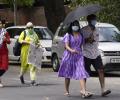
The India meteorological department said heatwave conditions will persist for at least two more days.
India is expected to experience hotter-than-usual temperatures from April to June, with more heatwave days in central and eastern India and the northwestern plains, the IMD said. Most parts of the country will see higher-than-normal maximum temperatures, except for some areas in western and eastern India where the temperatures are expected to be normal. Minimum temperatures will also be above normal in most regions. The IMD has warned that landslides could occur in parts of Kerala and Karnataka in the Western Ghats and that northeastern states might face flooding in April.
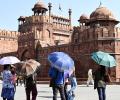
In Rajasthan, Pilani recorded 44.9 degrees Celsius, Phalodi and Churu touched 43.8 degrees Celsius and 43.5 degrees Celsius respectively, while Bikaner and Jaipur registered 43.4 degrees Celsius and 43 degrees Celsius.

Heatwave conditions are expected over northwest India during the next five days, with Punjab, Haryana, Rajasthan and Delhi predicted to bear the maximum impact, the India Meteorological Department (IMD) said on Thursday.

Temperatures in 17 locations breached 45 degrees Celsius on Monday, with the punishing heat affecting health and livelihoods.

To ensure immediate cooling of the body, the hospital has set up a first-of-its-kind heatstroke unit.

Temperatures remained above 45 degrees Celsius in large parts of Rajasthan, Haryana, Delhi, Chandigarh and Uttar Pradesh, affecting daily life as many chose to remain indoors in the afternoon.

Among the fatalities recorded on Friday, the maximum 17 were from Uttar Pradesh, 14 from Bihar, five from Odisha and four from Jharkhand, where officials said more than 1,300 people are hospitalised with heatstroke conditions.

The threshold for a heat wave is met when the maximum temperature of a weather station reaches at least 40 degrees Celsius in the plains, 37 degrees in coastal areas, and 30 degrees in hilly regions, and the departure from normal is at least 4.5 notches.

The heat wave is likely to impact parts of Jammu and Kashmir, Himachal Pradesh, Uttarakhand, Punjab, Haryana, Delhi, Rajasthan, Madhya Pradesh, Jharkhand, Odisha and Gangetic West Bengal, the Met office said.

Delhi sweltered under intense heat as the Safdarjung observatory, considered the official marker of the national capital, noted a high of 43.8 degrees Celsius, four notches above the normal average.

Western disturbances are near Pakistan-Afghanistan and are moving towards Delhi and thunderstorms or dust storms are likely to be experienced in northwest India, senior scientist at IMD RK Jenamani told ANI.
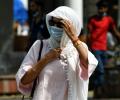
No part of northwest, central and east India is likely to record a heatwave over the next five days, the MeT office said.

IMD data shows in the 24 hours between September 1 and 2, Haryana received 806 per cent more rainfall than normal, Punjab 759 per cent, Himachal Pradesh 510 per cent, Delhi 740 per cent, Chandigarh a staggering 1,638 per cent, and Rajasthan 193 per cent.
'The intensity and frequency of heatwaves will be much higher than in previous years over Punjab, Haryana, Rajasthan, Gujarat, Madhya Pradesh and Odisha.'

The maximum temperature at the Safdarjung Observatory, Delhi's base station, is likely to rise to 45 degrees Celsius.

Above-normal heatwave days are predicted in most parts of central, east and northwest India during this period.

A fresh spell of heatwave is likely to begin over northwest India from May 7 and over central India from May 8, the India meteorological department said on Thursday.

The India Meteorological Department has issued an 'orange' alert.

The mercury breached the 46-degree Celsius mark in several places such as Allahabad (46.8 degrees Celsius) and Jhansi (46.2 degrees Celsius) in Uttar Pradesh; Sports Complex (46.4 degrees Celsius) in Delhi; Ganganagar (46.4 degrees Celsius) in Rajasthan; Nowgong (46.2 degrees Celsius) in Madhya Pradesh; and Maharashtra's Chandrapur (46.4 degrees Celsius).

The IMD said heatwave conditions are likely to continue over the northern plains, and central and southern parts of the country for two more days and abate gradually.

East and northeast India recorded 29 per cent rain deficit -- 141.5 mm against the normal of 199.9 mm -- from March 1 to May 3.

A study shows that the country has experienced 706 heatwave incidents from 1971-2019.

>Bihar (18 days) has the most number of heatwave days in 2023, followed by Andhra Pradesh (15 days), Odisha (15 days), Jharkhand (13 days), West Bengal (8 days) and Tamil Nadu (6 days).

The mercury at the Safdarjung Observatory is expected to breach the 43-degree mark on Thursday and touch 44 degrees Celsius by Friday, according to the India meteorological department.

Mercury hovered around 40 degrees Celsius in large parts of the country on Monday as the Indian meteorological department predicted heat wave conditions in parts of east India over the next four days and the northwest region over the next two days.

The Met office has issued a "red" warning for Delhi, Haryana, Punjab and west Rajasthan, stressing the need for "extreme care for vulnerable people".

Delhi Water Minister Atishi on Friday began her indefinite hunger strike in south Delhi's Bhogal to press on her demand for more water from Haryana.

The India Meteorological Department, which had issued a red colour-coded alert for north India for May 25-26 when the prevailing heatwave conditions are expected to peak, said dust and thunderstorms are likely to bring some relief on May 29-30.

Temperatures in 17 locations breached 48 degrees Celsius on Monday, with the relentless heat affecting health and livelihoods across large parts of northwestern and central India.

Seven out of eight women street vendors reported experiencing high blood pressure, while women in the middle age group raised concerns about delays in their menstrual cycles due to the extreme heat.
